
Contact and Follow-Up
Most photographers don’t lose the job because they weren’t good enough.
They lose it because they disappeared too soon.
They assume silence means no. In reality, silence usually means busy. Distracted. Overloaded. Your email is sitting in a tab next to 42 others.
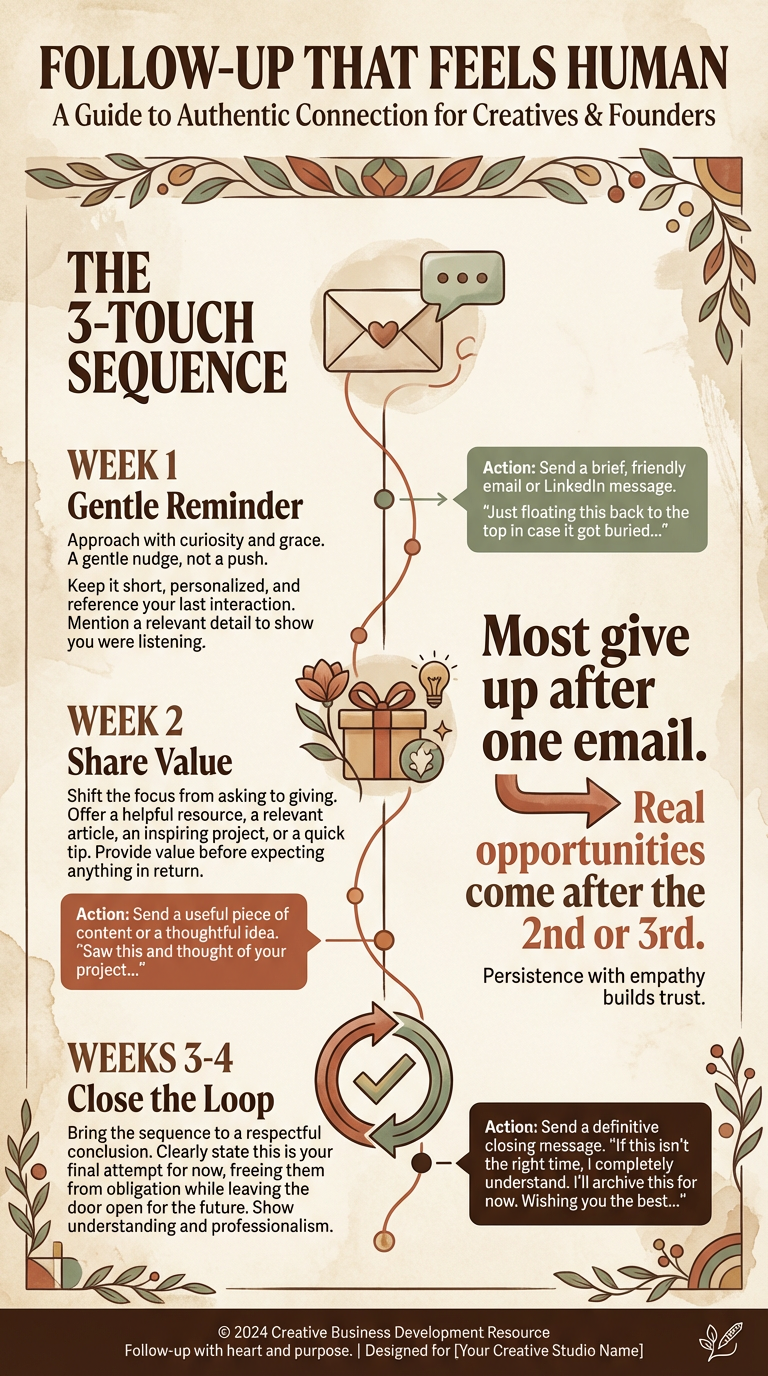
Opportunities often show up after the second or third follow-up
The trick isn’t persistence.
It’s persistence without pressure.
That’s where a simple 3-touch sequence comes in.
Touch One:
A gentle introduction. Short. Respectful. Keep it human. Something like: “Hey, I love what you are doing over at Simple Touch Bakdery. As a photographer, I appreciate the beauty in your craft. I specialize in bringing that beauty to light. I’d love to chat about pastry with you.”
Touch Two – Two Weeks Later
Now you add value
Share a relevant project. A useful article. An idea tailored to their business. This isn’t a nudge—it’s a contribution. You’re demonstrating that you think strategically, not just transactionally.
Touch Three – Three to Four Weeks Later
Close the loop politely
Leave the door open. “If now’s not the right time, no worries. I’d love to connect when it makes sense.” Calm. Professional. Zero drama.
That’s it. Three touches. Structured. Repeatable.
But here’s the part most photographers skip: tone.
If you try to sound like a corporate sales department, it will feel awkward.
You want to sound like you, a real person..
Consistency beats cleverness.
The best idea: systematize it.
Write one draft for each touch
Add the timing to your calendar or CRM
Automate the reminder—not the personality.
And test it. Send the sequence to at least three prospects this week
You’re not just building messages. You’re building muscle.
When you design your follow-up this way, something shifts.
You stop feeling like you’re pestering.
You stop wondering when to reach out.
You stop relying on memory and hope.
And when all the boxes are checked—sequence built, drafts written, reminders set, prospects contacted—your follow-up runs on autopilot without sounding robotic.
That’s the goal.
Not aggressive.
Not passive.
Professional.
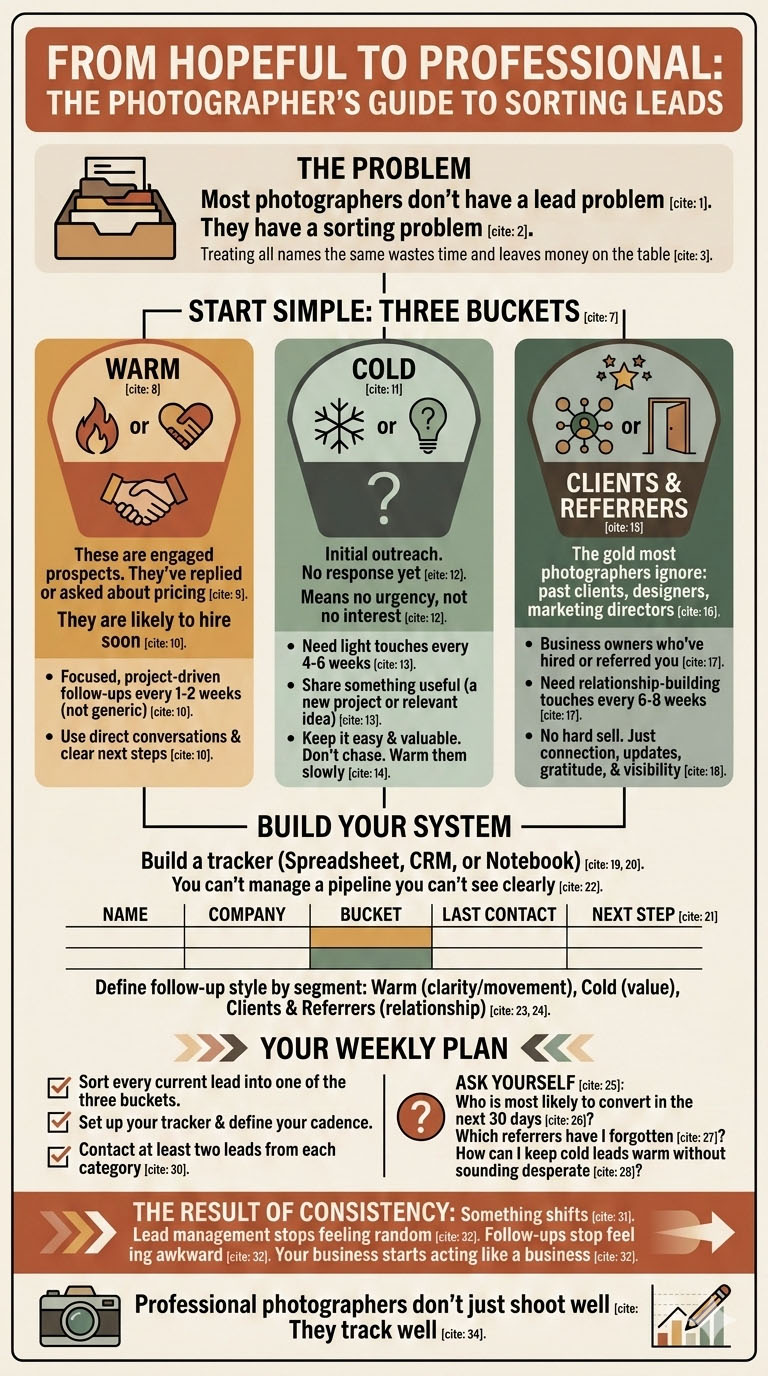
Most photographers don’t have a lead problem.
They have a sorting problem.
If every name in your inbox gets treated the same way, you’re wasting time. Worse—you’re leaving money on the table. Not all leads are equal. Some are close. Some are curious. Some are past clients who just need a reminder you’re still alive and shooting.
Segmenting your leads is how you move from hopeful to professional.
Start simple. Three buckets.
Warm.
These are engaged prospects. They’ve replied. They’ve asked about pricing. They’ve shown interest. These people are likely to hire soon. They deserve focused, project-driven follow-ups every week or two. Not generic check-ins. Direct conversations. Clear next steps.
Cold.
Initial outreach. No response yet. That doesn’t mean no interest—it means no urgency. These leads need light touches every 4–6 weeks. Share something useful. A new project. A relevant idea. Keep it easy. Keep it valuable. Don’t chase. Warm them slowly.
Clients & Referrers.
This is the gold most photographers ignore. Past clients. Designers. Marketing directors. Business owners who’ve hired you before or sent someone your way. They need relationship-building touches every 6–8 weeks. No hard sell. Just connection. Updates. Gratitude. Visibility.
Now build a tracker.
Spreadsheet. CRM. Notebook. I don’t care what you use—just use something. Create columns for Name, Company, Bucket, Last Contact, and Next Step. If you can’t see your pipeline clearly, you can’t manage it.
Then define your follow-up style by segment. Warm leads get clarity and movement. Cold leads get value. Clients and referrers get relationship.
Ask yourself:
-
Who is most likely to convert in the next 30 days?
-
Which referrers have I forgotten?
-
How can I keep cold leads warm without sounding desperate?
This week, sort every current lead into one of the three buckets. Set up your tracker. Define your cadence. Then contact at least two leads from each category.
When you do this consistently, something shifts.
Lead management stops feeling random.
Follow-ups stop feeling awkward.
And your business starts acting like a business.
Professional photographers don’t just shoot well.
They track well.