
The Mentor's Corner
Business and Marketing for ProsSEO IN THE AGE OF AI: CHANGES ARE COMING
Why SEO Is So Tough for Photographers
(And What to Do About It)
If you’re a photographer trying to get your website to rank on Google, you’ve probably noticed it’s a lot harder than it sounds. Your site might look gorgeous—full of stunning images, clean design, and minimal clutter—but when it comes to SEO, that “clean look” might be working against you.
The problem? Photography sites are typically visually rich and text-light. And that’s a real issue when you’re dealing with search engines that still rely heavily on text to understand what a page is about.
Let’s break it down.
The Limits of Alt Text and File Names
You’ve probably heard this advice before: add alt text to your images and use descriptive file names. That’s solid guidance, and it absolutely helps—just not as much as many photographers think.
Alt text serves two primary functions. It provides screen readers with a description of the image for accessibility, and it gives search engines a bit more context about the image content. Ideally, it should be under 125 characters, unique for each image, and written in a natural, keyword-friendly way—without stuffing.
Image file names are another basic SEO tool. Changing “IMG_2394.jpg” to something like “los-angeles-beach-elopement.jpg” gives Google a clearer idea of what your image depicts.
But here’s the kicker: even if you nail both alt text and file names, they’re just a sliver of the SEO pie. Alone, they won’t push your site anywhere near the top of search results.
Why That’s Not Enough
Google prioritizes textual content—especially when it comes to deciding what shows up in regular (not image-based) search results.
Alt text and file names can help your photos show up in Google Image Search, but they won’t do much to help your homepage, gallery pages, or portfolio land on the first page of a broader keyword search like “Scottsdale commercial photographer” or “New York food photographer.”
To rank well, Google wants context: keywords in headings, body copy, and metadata. It also takes into account how fast your site loads, whether it works well on mobile, how many people link to it, and how users interact with it.
SEO is holistic, and image optimization is just one small part of a much bigger strategy.
What You Should Be Doing
Here’s how to get smarter with your SEO without ruining the visual appeal of your site:
-
Write naturally descriptive alt text for every image—but keep it short, accurate, and unique.
-
Use meaningful image file names before uploading—no more IMG_1234s.
-
Add text content to your image pages. That could mean short captions, behind-the-scenes notes, or client testimonials. Bonus points for adding a few paragraphs that describe the shoot or what makes that kind of work your specialty.
-
Start blogging. Regular blog posts loaded with relevant keywords and real value help search engines understand your niche and keep visitors on your site longer.
-
Use proper headings and meta data. Your H1s, page titles, and meta descriptions should include target keywords you want to rank for.
Bottom line: Great photos alone won’t win the SEO game. But smart, strategic content alongside those photos? That’s where the magic happens.
Want to start optimizing your site the right way? Begin with your top gallery page—and add just 150 words. That tiny change might be the boost you’ve been missing.
Example Gallery Text for a Food Photographer
Sample Gallery Text Block: Commercial Food Photography
Welcome to my food photography gallery. I specialize in creating clean, appetizing images for restaurants, food brands, and editorial publications. My work focuses on natural light, fresh ingredients, and the kind of texture you can almost taste.
Whether it’s artisan bread, gourmet burgers, or minimalist product shots for packaged goods, each image is styled and lit to bring out the story behind the food. These photos have been used for menus, social media campaigns, magazine features, and web advertising.
Based in Phoenix, Arizona, I work with local and national clients who need polished, brand-ready imagery with fast turnaround and consistent quality.
Looking for a photographer who can make your food look as good as it tastes? Let’s talk.
Why it works:
-
Keywords appear naturally: “food photography,” “restaurants,” “packaged goods,” “Phoenix.”
-
Context is clear: It’s commercial food photography, not just random images.
-
Tone is friendly and human: Which is great for AI summarization and trust.
-
It invites engagement: With a soft call to action that fits the tone.
Example Gallery Text for a Product Photographer
Sample Gallery Text Block: Studio Product Photography
This gallery showcases my product photography work—clean, minimal, and focused on detail. I work with brands that need crisp, high-quality images for e-commerce, catalogs, packaging, and digital campaigns.
From skincare jars and fragrance bottles to tech gadgets and housewares, I photograph each item to highlight its design, texture, and function. Every shoot is styled and lit in the studio to ensure consistency across your product line and make your brand look its best.
I’m based in Phoenix, Arizona, and work with both local businesses and national brands. Whether you’re launching a new product or updating your online store, I deliver fast, polished visuals that help your products stand out in a crowded market.
If you’re looking for a reliable product photographer with a modern, detail-oriented style—let’s connect.
Now comes the next challenge: Being found in Chat.
Chat search is far different than SEO constructs.
How AI Search Works Differently
Unlike Google, which crawls and indexes pages based on algorithms focused on backlinks, metadata, and page structure, AI search engines pull information from a blend of real-time web data, structured knowledge, and user signals. They’re more conversational, they synthesize information, and they don’t rely on exact-match keywords the way traditional search does.
But they still need something to pull from. So your job is to make sure your content is:
Discoverable (meaning it’s online and accessible)
Structured (so it can be parsed)
Context-rich (so it can be summarized correctly)
Here’s how photographers can show up in tools like Perplexity and ChatGPT-powered search:
1. Publish Clear, Descriptive Content
AI tools thrive on context. If your website just says “Portfolio” or “Gallery,” that’s a missed opportunity. Instead, use descriptive headlines and subheadings like:
“Los Angeles Commercial Food Photographer Specializing in Editorial and Advertising Work”
That gives AI models something to latch onto.
2. Use Human-Friendly, Specific Language
Don’t just write for algorithms—write for readers. AI platforms are trained on natural language. That means they’re more likely to pull content that sounds helpful, conversational, and real.
So skip the jargon like “visual storyteller passionate about light and form” and get specific:
“I photograph modern, minimalist skincare products for health and wellness brands looking for clean, high-end imagery.”
3. Be Present on Platforms AI Crawls Often
AI tools like Perplexity and ChatGPT plug into real-time web sources, especially:
-
Substack
-
Medium
-
LinkedIn
-
Your own blog (with RSS feeds)
-
Portfolio platforms like Behance and Format
-
Credible directories like Google Business Profiles, Yelp, or Creative Directory sites
The more places you show up—especially those with public URLs—the more you’re part of the conversation.
4. Use Structured Data (Schema Markup)
This one’s more technical, but worth mentioning.
Structured data (like schema.org) tells machines what your page is about—whether it’s a product, an image, a portfolio, or a person. Use plugins (like RankMath or Yoast for WordPress) to implement it easily.
Adding schema like:
…helps AI identify you as a trusted entity.
5. Publish Frequently and Answer Questions
AI tools love up-to-date content. Posting regularly helps you stay relevant.
Also, consider writing short Q&A-style blog posts:
-
“What should you look for in a product photographer?”
-
“How much does commercial photography cost in Phoenix?”
These are the types of queries users type into Perplexity and GPT—and your content can be quoted directly.
Bottom Line
Photographers need to stop thinking only in terms of Google SEO. AI-powered search is the new frontier—and it’s context-driven, content-hungry, and lightning fast.
To show up, photographers need to:
-
Write like a real person.
-
Be specific and helpful.
-
Post in multiple places.
-
Keep content updated and accessible.
Recent Business Posts
HOW PERSEVERANCE WORKS AND ITS REWARDS
How Perseverance Works. Going into the photography business means you have to do some 'selling'. And no, you don't have to be a 'salesperson' but you do have to market and make people aware that you exist. Going into the photography business means you have to do some...
PROJECT 52 LOOKBOOK, “COLLECTIVE 2019” IS NOW AVAILABLE
The Project 52 Members have banded together to create this incredible LookBook. If you have wondered what is happening over at Project 52 Pro System, here is one way to find out. Most of these photographers were amateurs when they started the program... and look how...
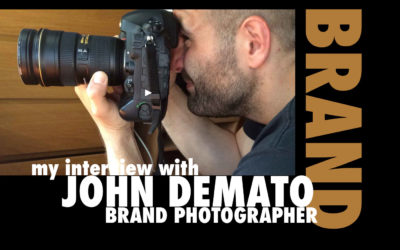
MEET JOHN DEMATO: PHOTOGRAPHING FOR THE PERSONAL BRAND
John lives and works in NYC and is currently focused on branded lifestyle portraiture for upcoming entrepreneurs and those who are seeking an authentic and powerful visual strategy. He writes a terrific newsletter that comes out three times per week and is hosting...
12 QUOTES THAT KEEP ME FOCUSED ON MY WORK
12 Quotes that Keep Me Focused on My WorkQuotes are an interesting phenomenon. They are made special because of who said them, and the context of what surrounds them culturally and socially.I love quotes about photography and art because they help me...
THE SECRET TO MAKING A GREAT PHOTOGRAPH
The Secret to Making a Great PhotographI have been making photographs for over 50 years now.Literally half of a century.And I have made some photographs that I like, and some photographs that other people like.And I have made a lot of photographs I don't...

COUNTER-INTUITIVE APPROACHES TO THE “NEW NORMAL”
Approaching the "New Normal" I would say right off the bat that I hate that term, the "New Normal" as it makes it seem like something we volunteered for. And it wasn't.And it isn't. There is nothing 'normal' about these last 6 weeks. And there will not be anything...

CREATIVE APPROACHES TO WORKING THROUGH THE QUARANTINE
As most of the country is seeing the numbers falling back into a more manageable condition, we are seeing evidence of the impending reopening of the economy. Most states are looking at doing it in stages, and with controls in place to prevent a re-occurrence of the...
PHOTOGRAPHER GREG KINDRED HITS THE KANSAS CITY MARKET
Greg Kindred was the art director / photo editor for a large group of pet related magazines - both consumer and trade. When the company decided to close its doors, Greg realized it was time to do something else. Fast. The skills he had built up as a photographer are...

BUILDING A MARKETING CAMPAIGN
Last week we discussed what a marketing campaign was, and how to get in front of clients that may need your services. And any company that makes something, sells a product or service needs photographs. Yeah, they can find bad stock photography and even great stock...

THE ANATOMY OF A MARKETING “CAMPAIGN”
Exactly what IS a marketing campaign? We hear this from photographers all the time: "You must market your work." And we know that is true. "Send out a postcard.""Use email lists.""Magazines are hot right now." Yeah, all of that is true, but without context and...

THE WAY I SEE IT… THE ROARING TWENTIES FOR PHOTOGRAPHERS
THE WAY I SEE IT… THE ROARING TWENTIES FOR PHOTOGRAPHERS As a consultant and educator for commercial photographers, I constantly have my fingers on the pulse of what is going on in the world of professional photography. I should point out that I am not interested nor...