
AI Corner
Free Webinar One
AI for 2026
The Best Prompts for Growth


Step One:
Catalog a brain dump of all your knowledge.
Make lists for:
- Work experience: Every job, role, and project you’ve completed
- Educational background: Formal degrees, certifications, and courses
- Hobbies & interests: Things you do for fun (ultrarunning, yoga, reading gothic horror)
- Life experiences: Challenges you’ve overcome, transitions you’ve navigated
- Skills you’ve developed: Both professional and personal
Be outrageously specific.
Don’t say, “I’ve photographed food for restaurants,” say, “I have photographed over 30 restaurants in the greater Phoenix area, including large chains like Taco Bell, and mom and pops like The Steakery. I have done advertising food shots, promotional work, plating, and social media food photography.
Step Two:
What else do you know?
The weird and strange and obtuse stuff.
- List your top 3 professional skills
- List your top 3 amateur skills
- List your top 3 personal interests or hobbies (other than photography)
- Write down any “random” knowledge areas you have (maybe you know a ton about 80s music, houseplants, or fantasy football)
Step Three:
Run the prompts below:
Be honest and be specific.
ChatGPT will:
- Map out niches where you have a natural advantage
- Uncover patterns in your personal knowledge you may be too close to see
- GPT will help you connect the dots between seemingly unrelated experiences
The key here is to answer each question fully before moving to the next one.
Don’t rush this process—it’s the foundation of your creative career. When you’re done, ChatGPT will give you an “Ikigai” report showing where your knowledge, passion, and market opportunity overlap. If you’re not familiar, Ikigai is a Japanese concept meaning “reason for being.”
It sits at the sweet spot where four elements converge:
What you’re good at (your skills)
- What you love (your passions)
- What the world needs (market demand)
- What people will pay for (monetization potential)
The middle is your “Ikigai.”
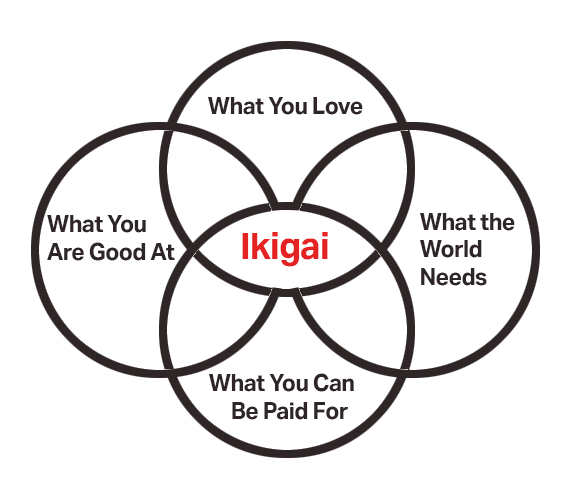
Run This Prompt First:
You are an elite business positioning strategist who has helped 500+ entrepreneurs identify their unique “Information Advantage” – the specialized knowledge that positions them to command premium rates in their market.
I want you to interview me and help me uncover my Information Advantage; the intersection of my specialized knowledge, expertise, passions, and personal interests that gives me competitive edge with high-value clients.
Here’s how I want you to run the interview:
Ask ONE question at a time, waiting for my response before proceeding.
Focus on uncovering:
– Jobs I’ve worked
– Hobbies I’ve started
– Goals I’ve reached
– Skills I’ve built
– Experiences I’ve had
Begin with broad questions about my professional background, then progressively explore my hobbies, goals, skills, and experiences.
Your tone should be curious, conversational, and focused—like a mix of a journalist and a strategist.
You ask follow-up questions to help me clarify my answers.
Don’t summarize my answers.
Ask me questions until I tell you to stop.
Then summarize my Information Advantage.
Give me:
– A list of niches I understand
– An explanation of why I have an edge in each space.
– An “Ikigai” report with insights for each intersection and sweet spot.
Let’s begin whenever you’re ready.
Run This Prompt Second:
Prompt: Build Your Custom Instructions for ChatGPT
Use this prompt exactly as written. Copy it into ChatGPT and fill in each section when asked.
Prompt:
Act as a creative strategist and language model trainer.
I’m a photographer and I want you to help me write the best “Custom Instructions” possible so ChatGPT understands my style, goals, and creative direction.
Ask me each of the following questions one by one, and wait for my answers before moving on.
SECTION 1: Basic Info
Ask me:
-
What’s your full name?
-
What city and region do you work in?
-
What kind of photography do you do? (e.g. food, portrait, commercial, fine art, lifestyle)
-
Who are your ideal clients or audiences?
SECTION 2: Style & Voice
Ask me:
-
How would you describe your writing voice in three words?
-
How do you want ChatGPT to sound when it writes for you? (examples: confident, conversational, educational, witty, poetic, etc.)
-
What do you hate about generic AI writing?
-
Share 2–3 phrases or sentences that sound like you — something you’ve written, or how you’d naturally speak.
SECTION 3: Goals & Use Cases
Ask me:
-
What do you want ChatGPT to help you with most often? (Examples: blog posts, email marketing, client proposals, portfolio ideas, social media, project brainstorming)
-
What are your top 3 business or creative goals for the next 6 months?
-
What challenges or bottlenecks are you facing that GPT could help with?
SECTION 4: Creative Identity
Ask me:
-
What inspires your photography?
-
How do you want your work to make people feel?
-
What three words describe your brand or visual aesthetic?
-
What’s one quote or belief that defines your creative approach?
Ask any additional questions you may need before executing.
SECTION 5: Final Assembly
Once I’ve answered everything, combine my answers into a polished “Custom Instructions” document, formatted like this:
How ChatGPT Should Respond (Tone, Style, and Approach):
[Summarize voice, tone, and perspective based on my answers.]
What ChatGPT Should Know About Me to Provide Better Responses:
[Summarize photography niche, goals, location, target clients, and creative direction.]
Examples of How I Speak or Write:
[List or paraphrase my phrases and voice traits.]
What I Want to Achieve Using ChatGPT:
[List main goals, recurring use cases, and desired outcomes.]
Creative Identity Snapshot:
[Summarize aesthetic, inspiration, emotional tone, and signature style.]
Closing Line
After you’ve written the final version, ask:
“Would you like me to refine this into a version ready to paste into your ChatGPT Custom Instructions panel?”
Run this prompt third.
Act as an experienced business strategist, investor, and startup advisor. Generate 10 tailored business ideas aligned with my goals, skills, and resources — 5 location-independent and 5 location-based. Each idea must be realistic, profit-driven, and explained with clear logic so I can identify which opportunity best fits my situation.
Context & Purpose:
This prompt helps founders, investors, and career-changers discover profitable, personally aligned business ideas that match their lifestyle, capital, and risk tolerance. It produces a decision-making blueprint — showing which ventures offer the best mix of feasibility, scalability, and lifestyle fit.
Detailed Input Requirements (fill in each placeholder):
• Background / Skills: [e.g., sales, marketing, SaaS, design, finance, fitness]
• Available Capital / Budget: [e.g., $25K, $100K, or minimal startup cost]
• Lifestyle Goals: [remote freedom, creative fulfillment, semi-passive income]
• Risk Tolerance: [Low / Medium / High]
• Time Commitment: [e.g., 10 hrs/week, full-time operator]
• Preferred Business Models: [SaaS, e-commerce, agency, local service, etc.]
• Desired Profit Range: [e.g., $10K/month or $250K/year]
• Timeline to Launch: [e.g., 3 months, 6 months, 1 year]
• Geographic Constraints: [global, regional, or location-bound]
• Long-Term Goal: [build and sell, lifestyle income, or replace job income]
• Other Notes: [unique network, expertise, or niche interests]
Additional Instructions:
• Split results into two sections:
Location-Independent Businesses (5)
Location-Based Businesses (5)
• For each idea, include:
• Business Name / Concept Title
• One-Sentence Summary
• Model & Revenue Stream
• Startup Difficulty (Low/Med/High)
• Startup Cost Estimate
• Expected Profit Range (12–24 mo)
• Scalability Rating (1–10)
• Why It Fits My Profile / Lifestyle Goals
Key Success Factors or Early Steps
• Rank all 10 ideas by alignment.
• End with a Strategic Recommendation summarizing the top 2–3 standout ideas and why they’re best.
Perfect Output Every Time:
• Delivers a Business Idea Blueprint with:
• 10 unique, well-structured business ideas (split by mobility)
• Profit ranges, startup costs, and difficulty ratings
• Clear logic behind each recommendation
• Ranked alignment and next-step clarity
• A concise strategic summary pinpointing top picks for execution
Wanna Get Really Wild?
Take all of the information that you have gotten here and put it in NotebookLM (free).
Then use NotebookLM to query the information for an even deeper understanding of what you do, and how you should proceed.
Here is what it created for me:
Your Path in Photography: A Guide to 10 Profitable Niches
You have the talent with a camera, but turning that skill into a sustainable career can feel daunting. The good news is, there isn’t just one path to success—there are many. This guide is your map to ten distinct and viable business models that work in the real world. Forget the noise; this is about finding a direction that fits your skills and your life.
To make it clear, I’ve divided these opportunities into two main categories: Service-Based businesses, where you get paid for your time and expertise on client projects, and Independent & Product-Based businesses, where you build assets—like courses or prints—that work for you.
Let’s start with the paths where you work directly with clients to bring their vision to life.
Part 1: Service-Based Photography Niches
1. Brand Story Sessions
- What You Do: You become the visual author for local brands, crafting a cohesive story through a mix of professional portraits, environmental shots, and detailed product images that define their identity.
- Who You Serve: Your clients are the backbone of the local economy: small businesses, artisans, and entrepreneurs who need to connect with their community.
- Why It’s a Great Path: This is where storytelling meets strategy. It has high scalability (8/10) because you can systemize your process, and that efficiency is what pushes your potential earnings to 50K–80K a year. You’re not just a photographer; you’re a vital partner in their success.
2. Editorial Portrait & Story Packages
- What You Do: You capture the person behind the profession, creating magazine-style, personality-driven portraits that use the environment to tell a deeper story.
- Who You Serve: Professionals, artists, and small business owners who know that a generic headshot won’t cut it and need imagery with character.
- Why It’s a Great Path: This is your fastest way into the game. With startup costs under $500, the barrier to entry is practically zero, letting you build a portfolio and generate cash flow while you master your craft. It’s a perfect fit if you excel at directing people.
3. Product & Food Studio
- What You Do: You specialize in making products and food look irresistible through high-quality still life photography, focusing on the details that make them stand out.
- Who You Serve: Local makers, cafes, and artisan producers who need their craft to look as good online as it does in person.
- Why It’s a Great Path: This niche is a workhorse. With very high scalability (9/10), you can build efficient systems for shooting and delivery, allowing you to take on a high volume of work without burning out. That efficiency is what drives the 50K–100K profit potential. If you already own the gear, your overhead is rock bottom.
4. Local Ad Campaign Production
- What You Do: Here, you’re more than a photographer—you’re the creative engine. You partner with brands from concept to final image, guiding the entire visual strategy of an ad campaign.
- Who You Serve: Small ad agencies and established local brands that are ready to invest in a complete, professional creative vision.
- Why It’s a Great Path: If you have a background in creative direction, this is your high-leverage play. It commands serious project fees (2K–10K) and puts you in the 60K–100K income bracket by leveraging your strategic brain, not just your trigger finger.
5. Desert Portraits Experience
- What You Do: You don’t just take photos; you create and sell an unforgettable experience—premium portrait sessions set in iconic and beautiful landscapes like the Arizona desert.
- Who You Serve: Travelers, tourists, and couples looking for more than a snapshot; they want a unique story to take home.
- Why It’s a Great Path: Love the desert but also love directing people? This is your niche. You’re selling a premium experience, which justifies strong session fees of 750–1,200 and turns your passion for the landscape into a profitable venture.
Working for clients builds your skills and your bank account. But what if you want to build assets that work for you? That’s where product-based businesses come in.
Part 2: Independent & Product-Based Photography Niches
6. Online Workshops & Courses
- What You Do: You package your hard-won expertise—in lighting, tabletop, or editorial work—into structured online courses that teach other photographers real-world skills.
- Who You Serve: Your students are fellow photographers and aspiring artists who are hungry for proven knowledge, not just abstract theory.
- Why It’s a Great Path: This is how you scale your knowledge. You create a valuable digital asset once, and it generates income over and over. With high scalability (9/10) and a profit potential of 60K–100K, it’s a powerful way to stop trading all your time for money.
7. Visual Language Mentorship
- What You Do: You become a trusted guide, offering one-on-one coaching to help other photographers find their unique voice, sharpen their portfolio, and build a real business strategy.
- Who You Serve: Mid-level photographers who have the technical skills but are stuck and need an experienced eye to help them break through to the next level.
- Why It’s a Great Path: This is the most direct way to monetize your wisdom. With startup costs under 500** and almost no overhead, it’s a lean, high-impact model where your expertise is the product, justifying coaching packages from **1,000–$2,500.
8. Southwest Fine Art Series
- What You Do: You create and sell limited-edition prints that are a pure expression of your artistic vision, exploring personal themes of landscape, texture, and light.
- Who You Serve: Your buyers are art collectors and enthusiasts who you connect with through galleries, art fairs, and your own online store.
- Why It’s a Great Path: Don’t mistake lower scalability (6/10) for lower value. This path is less about volume and more about legacy. It’s a long-term play that builds your reputation as an artist, which can open doors to galleries, commissions, and a different class of buyer.
9. The 25-Hour Photographer System
- What You Do: You build and sell a digital guide and mini-course that delivers a specific, high-value promise: how to build a successful photography business on part-time hours.
- Who You Serve: Your audience is other photographers, especially mature creatives, who are tired of the hustle culture and want to build a career without burning out.
- Why It’s a Great Path: This works because you’re selling a solution to a deep-seated pain point in the creative community. Its high scalability (9/10) and strong profit potential of 50K–90K come from creating an asset that solves a real-world problem for your peers.
10. AI & Photography Integration Guide
- What You Do: You create and sell digital tools for the modern photographer: AI templates, prompt packs for ideation, and mini-courses on integrating AI into their workflow for tasks like SEO and marketing.
- Who You Serve: Forward-thinking photographers looking to leverage new technology to work smarter, not harder.
- Why It’s a Great Path: This is about skating to where the puck is going. It’s a cutting-edge niche with ridiculously high scalability (10/10) and low competition. For a startup cost under 1K**, you can position yourself as a leader in a rapid-growth field and tap into a profit potential of **50K–$100K.
Conclusion: Charting Your Own Course
The niches in this guide aren’t just business models; they’re blueprints for a creative life. The question isn’t which one is most profitable, but which one aligns with the work you were meant to do.
Look at this list. Reflect on your strengths, your interests, and the kind of day you want to have. Then, choose a direction and start building. Stop waiting for permission. The world needs to see what you see.
And…
The Linchpin’s Manifesto: Where Art Works
1.0 Introduction: The Creative’s Dilemma
Talent is not enough. For every brilliant creative, a chasm exists between their gift and their livelihood. It’s the gap between art and money, between creative brilliance and real-world results. The world is filled with gifted artists, photographers, and writers whose best work remains unseen, unheard, and uncompensated, leaving them stranded on the wrong side of a sustainable career.
Bridging this gap requires more than another technique or a fleeting trend; it demands a fusion of identities. You’re not a specialist in one thing. You’re the linchpin where artistic excellence, creative leadership, and business acumen converge.
2.0 A Declaration of Principles
A career built to last is founded on an unwavering philosophy, not on reaction. These principles are the bedrock of an approach designed to create work that is both commercially viable and deeply meaningful. They are not rules but guiding truths for navigating the complex world of professional creativity.
- Intention Over Trends. The goal is to create “work that works,” not to chase fleeting styles. Strategy and purpose guide every decision, ensuring the final product is effective, timeless, and resonant.
- Craft and Mindset in Harmony. Technical mastery is only half the equation. Students grow because you push them—and they trust you to do it. True growth comes from pairing exceptional skill with a strategic, resilient mindset.
- Soul and Structure United. The most powerful personal projects are born from a blend of imagery, writing, and punch-in-the-gut honesty. This philosophy brings structure to soul, giving personal vision a framework that can be shared, understood, and monetized.
- Authenticity Without Kitsch. To document a place, a culture, or a person is a responsibility. This work is informed by real experience—motorcycle trips, small towns, slot canyons, jazz clubs—and honors its subjects with genuine insight, steering clear of clichés to reveal a deeper truth.
- Translation Between Art and Commerce. The most crucial function is to be the translator who helps gifted creatives get seen, understood, and paid. This is about building systems that attract opportunity without asking artists to sell out or compromise their integrity.
These principles are not abstract ideals; they are the lived-in philosophy of a specific identity—the Linchpin.
3.0 The Linchpin Identity: A Convergence of Roles
A unique and defensible advantage doesn’t come from being a narrow specialist. It emerges from the convergence of multiple expert roles into a single, cohesive identity. The linchpin is not just one thing but the central figure where distinct domains of expertise meet and amplify one another.
3.1 The Master Artist & Storyteller
The foundation is a deep and practical command of the craft itself. This identity is built on 40+ years of client-side experience and a mastery of photography, design, and storytelling. It has been tested and proven through high-profile engagements with iconic brands and figures like Motorola, Muhammad Ali, and U.S. Swimming, and is informed by a lifetime spent documenting and understanding American Culture and Creative Americana.
3.2 The Proven Mentor & Educator
Expertise that isn’t shared is a wasted asset. This identity is validated through years as a Global workshop leader, CreativeLive alum, and the creator of Project 52. The role of educator is not merely about transferring information; it is about inspiring transformation.
3.3 The Strategic Business Acumen
Artistic talent and teaching ability are fortified by proven business expertise. Having built an agency from scratch, scaled it, led it, and mentored its talent, this identity is fluent in the languages of both the artist’s studio and the boardroom. This dual fluency, cultivated by living in both the “ad world and the artist’s world,” provides a rare understanding of psychology, presentation, and the mechanics of a creative enterprise.
The convergence of Artist, Educator, and Strategist creates a singular advantage—a unified force ready to build careers that last.
4.0 The Ikigai Mandate: Purpose-Driven Work
To create a career that is not only profitable but also fulfilling and impactful requires operating from a place of deep alignment. The Japanese concept of Ikigai represents this ideal state—the intersection where what you love, what you are good at, what the world needs, and what you can be paid for all converge. This is the mandate for purpose-driven work.
What I Love: Photography, jazz, mentoring, personal projects, creative independence.
What I Am Good At: Lighting, ideation, teaching, composition, writing, leading creatives.
What The World Needs: Creatives who can actually thrive. Clients who need messaging with meaning. Places and people worth documenting before they vanish.
What I Can Be Paid For: Commercial photography, creative consulting, mentorship programs, personal project publishing, marketing strategy for artists.
This alignment is not theoretical; it is the blueprint for tangible offers where system and soul meet. It’s how Creative Legacy Coaching is born to serve what the world needs (thriving creatives), and how Visual Americana Projects channel a love for photography and creative independence into monetizable assets. This foundation ensures every project is not just a job, but a calling.
5.0 The Promise: From Vision to Value
A philosophy is only as powerful as the promise it keeps. For creatives who are serious about their work, the promise must be one of tangible transformation. It is a commitment to move them from a state of unrealized potential to one of recognized and rewarded value.
“I help serious creatives turn skill into systems, and vision into value. If your work matters, I’ll help the world see it—and pay for it.”
This core promise is tailored to the brutal realities faced by different creative professionals:
- For Emerging to Mid-Level Photographers: For those stuck in the 30K–70K/year limbo, tired of empty advice and Instagram traps, the promise is clarity and action. “You’re good. But good isn’t booked. I help serious photographers build systems that attract real clients—without selling out or begging for likes.”
- For Creative Professionals Over 50: For the seasoned pros with talent, experience, and zero traction—those stuck in a low-income, high-talent limbo—the promise is validation and visibility. “Age isn’t the issue. Clarity is. I work with seasoned creatives who are ready to stop guessing, start getting seen, and finally build the career they should’ve had all along.”
- For Agencies and Small Brands: “I help brands tell better stories through images that do the work. Strategic photography, clear messaging, and 40+ years of knowing what works.”
Each promise is a direct path from a common frustration to a desired outcome. It is the first step toward the ultimate goal: building not just a career, but a lasting legacy.
6.0 The Invitation: Build Your Legacy
The time for guessing is over. This is the moment to decide if your work is a hobby or a profession. It’s an invitation to stop wasting your talent on strategies that don’t deliver and finally build something that provides, endures, and matters.
The mission is simple and direct: to help you turn raw talent into a legacy and a living.
Your edge isn’t just in what you know. It’s in who you are when you teach it. That’s the real advantage.
And…
40 Years of Skill Acquitition
And:
Comparative Analysis of Proposed Flagship Offers
1.0 Introduction
This document provides a detailed, side-by-side comparison of three proposed flagship offers: “Creative Legacy Coaching,” “The Photographer’s System Sprint,” and “Visual Americana: Ride, Shoot, Publish.” These offers have been developed to leverage Don Giannatti’s unique ‘Information Advantage,’ which combines 40+ years of professional photography, creative business mentorship, and a distinct voice in visual storytelling. The purpose of this report is to clearly outline the distinct positioning, target audience, core promise, and strategic advantages of each offer to facilitate an informed decision on which to develop first.
2.0 At-a-Glance Comparison Matrix
|
Attribute |
Creative Legacy Coaching |
The Photographer’s System Sprint |
Visual Americana: Ride, Shoot, Publish |
|
Positioning |
“You’ve built the skills. Now let’s build the legacy.” |
“4 weeks. 1 system. Paid gig or I keep working with you.” |
“Stories from the two-lane highways—captured, written, and lived.” |
|
Target Audience |
Seasoned creatives (50+) with talent, experience, and zero traction. |
Emerging and mid-level photographers stuck in 30K–70K/year limbo. |
People who follow you for the imagery, the motorcycle mystique, and the personal storytelling. |
|
Core Promise |
Turn 40 years of work into a magnetic presence, a refined offer, and a system for sustainable income and impact. |
Two meetings a week. One system to find, pitch, and land paying work. No fluff. No Instagram traps. |
A platform and a series: photography + writing + podcast or newsletter + print edition. Includes behind-the-scenes process for the audience. |
|
Strategic Advantage |
Nobody is talking to these people. You are them. This is high-trust, high-ticket territory. |
Concrete. Outcome-driven. Clear path + Don’s tough-love voice = serious conversions. |
It’s personal. It’s yours. And it brings in people who want to be part of the ride. Perfect for building audience + monetizing through product or Patreon-style model. |
3.0 Detailed Offer Breakdowns
3.1 Offer A: Creative Legacy Coaching
- Positioning: “You’ve built the skills. Now let’s build the legacy.”
- Target Audience: Seasoned creatives (50+) with talent, experience, and zero traction.
- Core Promise: Turn 40 years of work into a magnetic presence, a refined offer, and a system for sustainable income and impact.
- Strategic Advantage: Nobody is talking to these people. You are them. This is high-trust, high-ticket territory.
- Source Alignment: This offer directly targets a ‘Creative Business Mentorship’ niche where your role as a translator between ‘art’ and ‘money’ is a key advantage. It also aligns with the Ikigai sweet spot of helping ‘seasoned or late-start creatives build a body of work that means something.’
3.2 Offer B: The Photographer’s System Sprint
- Positioning: “4 weeks. 1 system. Paid gig or I keep working with you.”
- Target Audience: Emerging and mid-level photographers stuck in 30K–70K/year limbo.
- Core Promise: Two meetings a week. One system to find, pitch, and land paying work. No fluff. No Instagram traps.
- Strategic Advantage: Concrete. Outcome-driven. Clear path + Don’s tough-love voice = serious conversions.
- Source Alignment: Leverages your proven expertise in ‘Marketing for Creatives’ and your established reputation as a tough-love educator from ‘CreativeLive’ and ‘Project 52.’ This is a codification of what you already do best.
3.3 Offer C: Visual Americana: Ride, Shoot, Publish
- Positioning: “Stories from the two-lane highways—captured, written, and lived.”
- Target Audience: People who follow you for the imagery, the motorcycle mystique, and the personal storytelling.
- Core Promise: A platform and a series: photography + writing + podcast or newsletter + print edition. Includes behind-the-scenes process for your audience.
- Strategic Advantage: It’s personal. It’s yours. And it brings in people who want to be part of the ride. Perfect for building audience + monetizing through product or Patreon-style model.
- Source Alignment: This is the purest expression of your personal brand, combining the ‘American Culture + Creative Americana’ niche with your ‘Visual Storytelling’ skills. It monetizes the very identity your audience already follows.
4.0 Strategic Recommendation
The three proposed offers represent distinct strategic pathways, each leveraging a different facet of your core strengths. The decision of which to pursue first is a matter of prioritizing immediate business objectives against long-term brand equity.
- Creative Legacy Coaching is a high-trust, high-ticket mentorship play. It is the most aligned with your Ikigai of guiding seasoned creatives but requires a longer sales cycle built on deep trust.
- The Photographer’s System Sprint is a high-volume, outcome-driven product. It is concrete, scalable, and targets an audience eager for tangible results, making it ideal for rapid market validation and revenue generation.
- Visual Americana is a long-term audience and brand play. It is the most authentic expression of your personal identity and is perfectly suited for building a loyal, monetizable community over time.
For immediate revenue generation and market validation, The Photographer’s System Sprint is the optimal starting point. Its clear, guaranteed outcome makes it the easiest to market and sell, providing the cash flow and momentum needed to fund other initiatives. It codifies a process you have already mastered through decades of teaching and mentorship.
Once the System Sprint is established, resources can be allocated to developing Visual Americana: Ride, Shoot, Publish. This is not just an offer but the central pillar of your long-term, defensible brand. It will attract the ideal audience and serve as a platform from which higher-ticket offers, including a refined version of Creative Legacy Coaching, can be launched in the future.
This phased approach—starting with a scalable, results-driven product before building out the core personal brand—mitigates risk while creating a sustainable ecosystem for long-term growth.
A Simple Prompt (Extra for You)
Digging into the real markets around you.
You’re not just a photographer—you’re a service provider. That means understanding what kinds of businesses actually need the kind of work you do, and which of them are close enough to hire you.
This is one of the most important things you can do to stop spinning your wheels and start landing better clients.
Your task:
Fill out the prompt below. You can either drop it into ChatGPT for a response, or write your own 300–500 word brief using the same structure.
ChatGPT Prompt:
(Copy, paste, and fill in your info.)
Help me identify the best markets for my photography based on the information below. Then suggest 3–5 business types or industries in my area that are likely to need my services, and explain why my work would be a good fit for each.
Location: [City, State + nearby metro areas I can reach]
Genres I shoot: [List 2–3 primary types of photography]
My business level: [Aspiring / Emerging / Early Pro / Full-Time / Scaling]
My strengths: [2–3 things you do well—style, client experience, speed, lighting, etc.]
Who I’ve worked with (if anyone): [Name clients or types, or write “building portfolio”]
Dream clients (optional): [Brands, industries, or types of assignments you want]
SAMPLE:
Help me identify the best markets for my photography based on the information below. Then suggest 3–5 business types or industries in my area that are likely to need my services, and explain why my work would be a good fit for each.
Location: [Phoenix, Arizona)]
Genres I shoot: [Lifestyle, food, portraits]
My business level: [Fulltime Pro]]
My strengths: [art direction and ideation, location work, working with teams] Who I’ve worked with (Bar S, Motorola, JC Penny, Ad agencies): [
Name clients or types, or write “building portfolio”]
Dream clients (optional): [Lands End, Sunset Magazine, Outdoors Magazine]
RESPONSE:
Market Opportunities for Don’s Photography in Phoenix, AZ
Based on your genres (lifestyle, food, and portrait photography), your full-time pro status, and your strengths in art direction, team collaboration, and location-based work, here are five markets in the Phoenix area that would be a strong fit for your services:
1. Hospitality + Travel Brands (Hotels, Resorts, Tourism Boards)
Phoenix is packed with resorts, spas, and boutique hotels that are constantly updating their visuals to attract visitors. Your lifestyle approach—especially with strong location work and team experience—fits perfectly into this space.
Examples:
-
Sanctuary Camelback Mountain
-
Visit Phoenix (CVB)
-
Kimpton Hotels Southwest Region
Why You Fit: You bring art direction and a polished aesthetic that aligns with high-end hospitality. Your location work helps tell a story of experience, not just a room.
2. Outdoor + Lifestyle Product Companies
Phoenix is an outdoor lover’s playground, and brands in this space need authentic lifestyle imagery that captures real use—not sterile product shots.
Examples:
-
Outdoor Voices (regional campaigns)
-
REI Co-op (local events or brand content)
-
Local desert hiking/camping gear startups
Why You Fit: Your dream clients like Lands’ End and Sunset Magazine speak directly to this niche. You can deliver content that blends product, people, and place.
3. Regional Food + Beverage Producers
Arizona’s food scene is booming—from craft coffee and distilleries to boutique food brands. These businesses often lack the visual storytelling that could elevate their brand.
Examples:
-
Arizona Wilderness Brewing Co.
-
Queen Creek Olive Mill
-
Local CPG startups (salsas, chocolates, teas)
Why You Fit: Your food photography combined with lifestyle storytelling makes you ideal for capturing both the product and the human experience behind it.
4. Healthcare + Wellness Brands
There’s a large healthcare, wellness, and medical tech sector in Phoenix. These organizations increasingly rely on lifestyle imagery for ads, recruitment, and patient-focused marketing.
Examples:
-
Banner Health
-
HonorHealth
-
Holistic wellness brands or retreat centers
Why You Fit: You can work with teams and navigate environments that require sensitivity and clarity, while still delivering fresh, people-first imagery.
5. Regional Ad Agencies + Creative Studios
You’ve already worked with agencies like Bar S and Motorola—so local and regional creative shops are natural allies. They often need contract photographers with vision and execution chops.
Examples:
-
OH Partners
-
Highnoon
-
Nomadic Agency
Why You Fit: You’re not just a shooter—you bring concepts, work well in a collaborative environment, and understand brand voice. You’ve done it at the national level.
PROMPT NUMBER TWO
Prompt: Portfolio-to-Market Match
“Here’s an example of one of my photographs. Based on the genre, subject matter, and style, help me identify 3–5 potential markets or types of clients in my home city who might benefit from this kind of image. For each one, explain how this image could support their business goals.”
Image link or short description: [Paste a link or briefly describe the image]
Genre: [e.g., Food, Lifestyle, Product, Architecture, etc.]
Location: [City + nearby areas]
My business level: [Aspiring / Emerging / Early Pro / Full-Time / Scaling]
Dream client (optional): [List one or two ideal clients if you want it tailored further]
Here’s an example of one of my photographs. Based on the genre, subject matter, and style, help me identify 3–5 potential markets or types of clients in my home city who might benefit from this kind of image. For each one, explain how this image could support their business goals.
Image link or short description: [Attached]
Genre: [Lifestyle, environments.]
Location: [Phoenix and the west]
My business level: [Fulltime Pro]]
Dream client (Lands End, AZ tourism, Outdoor Magazine):