
The Mentor's Corner
Business and Marketing for ProsIs Your Portfolio Ready for Tomorrow’s Meeting?
Building a Market-Ready Portfolio
A portfolio isn’t a scrapbook. It’s not a memory wall or a “greatest hits” reel. It’s your visual sales tool—the clearest expression of what you do, how you think, and why someone should hire you.
If Chapter 2 helped you define your niche, this chapter shows you how to prove it—with strategy, curation, and intent.
Your Portfolio Is a Business Tool
Your images don’t just need to be good—they need to be useful. To the viewer. To the client. To the job you want next. A market-ready portfolio isn’t about showing off, it’s about showing up—with work that says:
“This is what I do. This is who it’s for. And yes, I’m ready.”
Curate With Intention
Start with 20–30 images. That’s it. Every image should earn its place.
Ask yourself:
-
Can someone instantly tell what I specialize in?
-
Do these images look like they came from the same photographer?
-
Would a paying client want work like this?
Leave out the one-off experiments. Ditch anything that doesn’t align. Consistency beats variety. You’re not showing everything—you’re showing the right things.
Group Your Work Like a Buyer Would
Don’t make clients work to “get” you. Instead, organize your portfolio the way they think:
-
Product: Clean on-white shots, styled product scenes, or packaging in context
-
Food: Flat lays, plated dishes, restaurant environments, process shots
-
Lifestyle: Branded scenarios, natural moments, people interacting with products
-
Editorial: Story-driven imagery with a sense of narrative and place
Clear categories make it easier for clients to self-select—and for you to be taken seriously in your niche.
Show Range Without Losing Focus
Yes, clients want specialists. But they also want to know you’re versatile within your lane.
Let them see:
-
Bright daylight and dramatic controlled lighting
-
Studio cleanliness and on-location chaos
-
Detail shots and environmental context
Keep your visual language consistent—so even with variety, there’s a throughline of you in every frame.
Sequence Like a Story
Whether it’s a website, PDF, or print book—order matters.
-
Start strong. Lead with your best image.
-
Build rhythm. Mix wide and tight shots. Vary pacing.
-
End memorably. Your second-best image goes last—leave them with impact.
You’re not just showing work. You’re guiding a feeling.
Context Is a Multiplier
Add short captions where it helps. No fluff—just function.
“Shot for X brand’s spring campaign. Used in print, web banners, and point-of-sale.”
That context shows you’re client-ready. You think in deliverables, not just images.
No Client Work?
No Problem.
Make Your Own.
You don’t need to wait for permission to prove what you can do. Fill gaps with intentionally crafted personal projects.
-
Mock up a campaign for your dream brand
-
Style and shoot your favorite products as if hired
-
Create a photo essay for a magazine that doesn’t exist (yet)
If it solves a client problem and fits the brief—you’re already doing the work.
Format Like You Mean It
One portfolio isn’t enough. You need options:
-
Website: Clean, fast, and updated quarterly
-
PDF: Easy to send with cold pitches or follow-ups
-
Case Studies: For your blog, newsletter, or deck
-
Instagram: Not just pretty—aligned
Every platform is a handshake. Make sure your grip is solid.
Review Quarterly, Ruthlessly
Your portfolio is a living document. Set a date every quarter to:
-
Add new work that fits your direction
-
Remove anything that feels tired, off-brand, or below your current standard
-
Re-sequence for flow and relevance
You’re only as strong as your weakest image. Don’t let old work sabotage new opportunities.
Final Thought
A great portfolio doesn’t just get attention—it builds trust. It doesn’t say “look what I can do.”
It says, “This is exactly what you’ve been looking for.”
When you align your focus (Chapter 2) with your presentation (this chapter), you don’t just look professional. You are a professional.
Recent Business Posts
No Results Found
The page you requested could not be found. Try refining your search, or use the navigation above to locate the post.
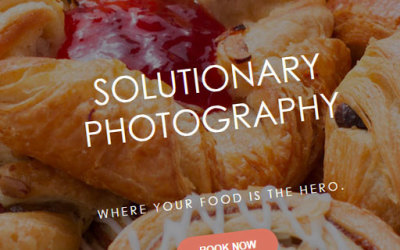
A very powerful EMail Campaign by Photographer John McAllister
John McAllister is a photographer in High Wycombe, UK. I worked with him on this email campaign for restaurants. John designed it himself and I collaborated on the copy. In this campaign we focus on the benefits to the customer, not the assets of the photographer. It...
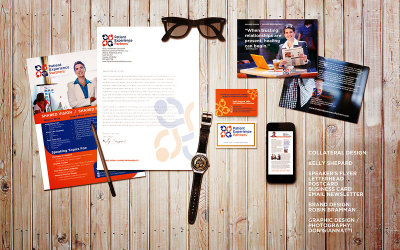
Initial Collateral Design for Professional Speaker
My partner Robin and I have just completed a gig for Health Care Specialist Kelli Shepard. Robin is a Branding Expert (www.robinbramman.com) and she put together a brilliant brand strategy for Kelli. I am doing the photography and graphic design. Web design may be...
On the Power of Imagery
Fashion Photographer Nick Knight on the power of the photograph, and its global reach; "Having a phone and an Instagram account means that I can create images on my own. When I first started using it a couple of years ago, it reminded me of the 70s, when I first...

Six Reasons Why You Should Hire a PROFESSIONAL Photographer
Most people will go through life without ever having to hire a professional photographer. Unless we are talking about wedding photographers, or portrait photographers who photograph our kids for school, most folks just never have a need for a commercial photographer....

15 Free “Urban Color” Images for Bloggers/Designers
Free for personal or commercial use, these urban color closeups can be used for backgrounds, textures or simply bits of color. See the whole group of them here. You can also download the entire set as a zip file in the page. Enjoy.

Are “Brands” the Next Big Trend in Photography?
They are indeed, according to Paul Melchor. The influence of social media and brand identification are quite a powerful force. And where once editorial ruled the sensibilities of the advertisers, it is now "brand" photography that is engaging the ad world. Images...