
The Home Studio
Time to takd a look at our inner sanctum… and, err, kitchen.
You don’t need that much space, but you will have to be very organized. Here is how to prepare a clean, efficient, studio that you can live with… and in.
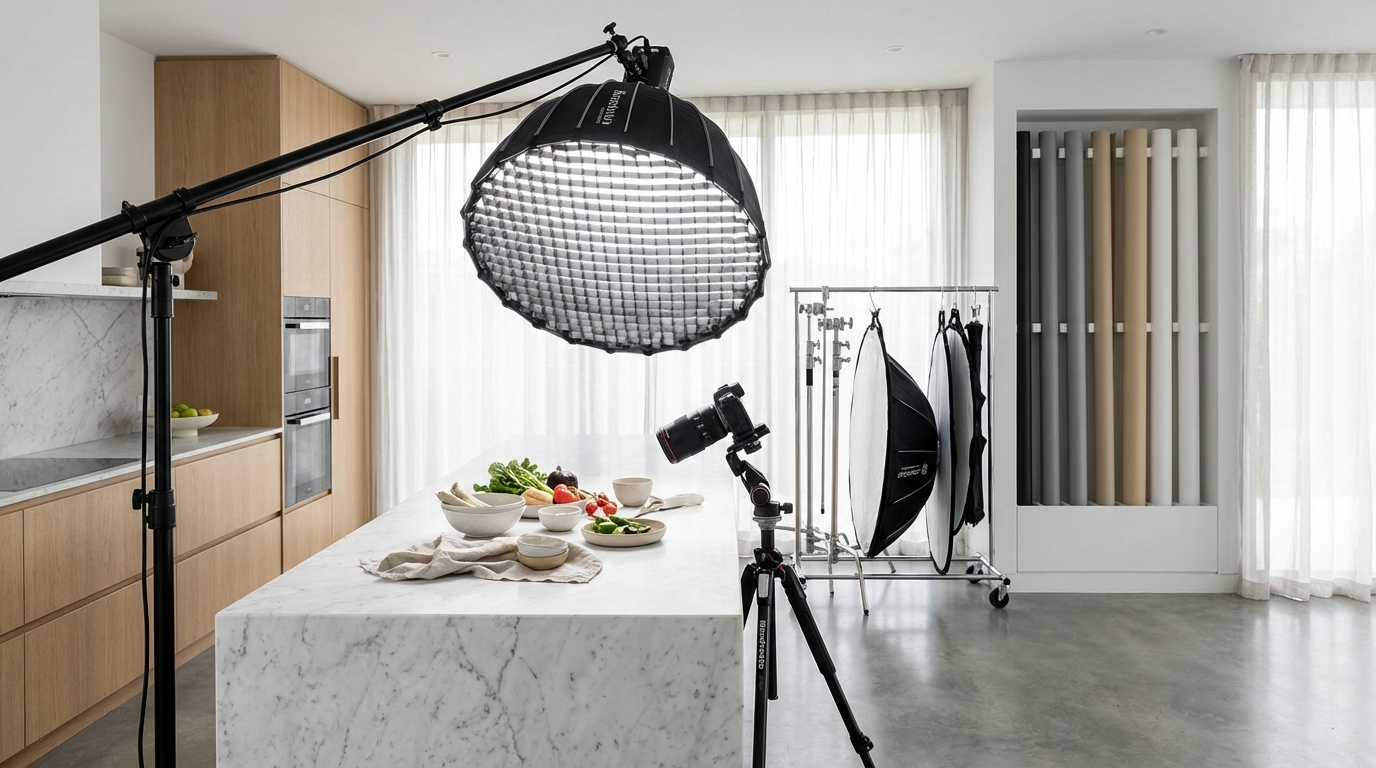
Why Your Kitchen is a Better Studio Than You Think:
4 Lessons from the Minimalist Photography Side-Hustle
“Your space doesn’t matter; your lighting decisions do.”
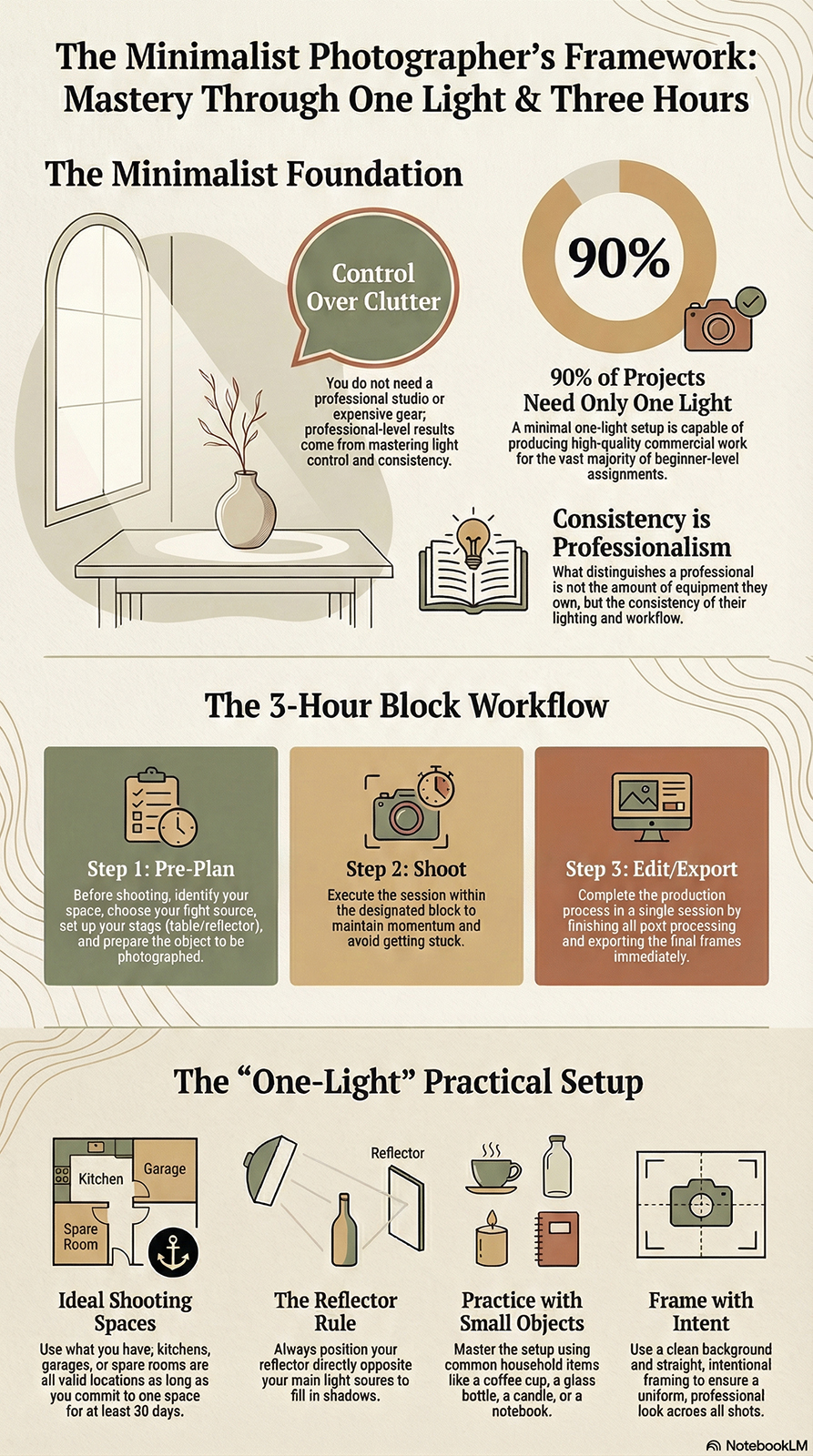
“Consistency in lighting and workflow is what makes you look like a professional, not more equipment.”
(a coffee cup, bottle, or candle) using the Pre-Plan → Shoot → Edit sequence.
MEETING NOTES
Quick recap
The meeting focused on photography techniques and post-processing for commercial product shots. Don provided detailed guidance on lighting setups, particularly for shooting reflective surfaces like chrome bottles, and demonstrated how to use Photoshop and Lightroom to adjust exposure and contrast. The group discussed different website platforms (WordPress, Squarespace) and their pros/cons, with Don recommending Divi as a user-friendly WordPress option. Don shared portfolio-building techniques, emphasizing the importance of showing both light and dark versions of product shots on the same landing page. The session concluded with a technical discussion about shooting chromed products using a shift lens technique to minimize distortion.
Next steps
- All participants: Complete 5 shots for next week’s assignment – 3 in your main lane and 2 in your secondary lane
- Mac: Review Don’s comments on video as Mac won’t be present in next week’s session
- All participants: Meet 30 minutes earlier for next week’s session (new time: 6:30 Pacific/9:30 Eastern)
- Becky: Re-shoot the chrome bottle using the low camera angle technique demonstrated by Don
- All participants: Review the reading materials for the upcoming class
Summary
Website Platform Comparison Discussion
Don discussed website platforms, comparing WordPress and Squarespace. He explained that WordPress requires maintenance and updates, while Squarespace is easier but more expensive. Don recommended Divi as a user-friendly WordPress framework. The group agreed to move their next meeting 30 minutes earlier. Don advised on structuring websites for commercial work, suggesting a landing page format with clear copy, photographs, and a call to action. William added that while WordPress can be challenging, security has improved significantly in recent years.
Website Platforms and Portfolio Photography
Don discussed website platforms, explaining that Squarespace costs around $300 annually plus $250 for Acuity scheduling, while WordPress themes require coding knowledge and can be expensive. He advised against traditional WordPress themes and recommended Divi or Beaver Builder page builders at around $70-90 per year. Don assigned participants to create portfolio shots following daily prompts, emphasizing simple, clean images that can be taken at home with everyday items. He referenced Judy Doherty’s work as an example of professional photography that can be done at home without elaborate setups.
Efficient Photography Techniques
Don discussed the importance of simplicity and efficiency in photography, emphasizing the need for photographers to focus on creating a limited number of high-quality images rather than taking numerous shots. He encouraged participants to adopt a “mini-shoot” approach, aiming to complete a shoot within one to two hours, and shared techniques for creating diverse images with minimal props and setups. Don also highlighted the value of showcasing a range of shots, including close-ups, details, and contextual images, to demonstrate creativity and problem-solving skills to clients.
Photoshop Curves and Levels Tutorial
Don led a Photoshop tutorial session, emphasizing the importance of using curves and levels for adjusting digital images. He explained that curves are better for detailed adjustments, while levels are quicker for web use. Don also discussed the need for proper contrast and lighting, particularly when working with white objects against dark backgrounds. The group practiced various techniques, including using gradients and selecting objects for soft darkening. Don encouraged the participants to experiment with different settings, such as depth of field, and to ensure their images have a range of exposure settings for client needs.
Advanced Jewelry Photography Techniques
The group discussed photography techniques, focusing on depth of field, contrast adjustments, and the use of vignettes to enhance images. Patrick shared his setup using a plastic ceiling tile for lighting and textured backgrounds, while Don provided feedback on contrast and exposure adjustments. Mike presented jewelry photography, highlighting challenges with chains and tools like dental picks or chopsticks for precise manipulation. The team also discussed the importance of long tools for finesse and shared tips on creating clean, professional images suitable for jewelers and artisans.
Product Photography Lighting Techniques
Don and Mac discussed lighting techniques for product photography, focusing on using black cards to create contrast and enhance the appearance of items like bottles and cars. Don emphasized the importance of placing the horizon line appropriately to maintain the dynamic shape of objects and suggested using masks to smooth transitions. They also talked about a future photoshoot where Mac will capture creative shots of props in two weeks.
Vivesa Lighting and Format Discussion
Don reviewed a video and provided feedback on lighting techniques, suggesting the use of Vivesa for radial brightening and emphasizing the importance of precision in composition. Debra shared her experience using Vivesa for flower photography and discussed the benefits of shooting in different formats, including landscape, square, and cinematic. Don praised Debra’s attention to detail and encouraged others to consider the three main formats when shooting.
Photography Techniques and Feedback
Don provided feedback on several photography shots, focusing on lighting, background techniques, and composition. He advised Debra to use black cards for better contrast and to consider the space between objects in still life photography. Don also helped Becky understand how to handle reflections and glare in product shots, suggesting the use of black cards and a lens hood. Luciana shared her close-up plate shots, and Don encouraged her to explore different formats for her photography.
Reflective Photography and Post-Processing
The group discussed photography techniques, particularly for shooting reflective surfaces like chrome. Don demonstrated how to use black cards and specific lighting angles to capture reflections correctly. They also covered post-processing techniques in Photoshop, including using Levels and Curves to adjust exposure. The class reviewed assignments for the next session, which will focus on marketing the work through emails and websites. Don advised the group to study how professionals photograph products like watches to understand lighting techniques.
Course Details
Module
Two: The Home Studio Revolution
Summary:
How to use a home studio and keep ahead of what is needed.
ZOOM LINK
Saturdays: 6 AM Pacific
Image Upload:
|
Upload files
|
|
|
|
|
|
|



|
|
Image Size: 1200 pixels on long side
IMPORTANT: IMAGE FILE NAME
SH-first-last-module-#
(Like this: SH-don-giannatti-module-1)
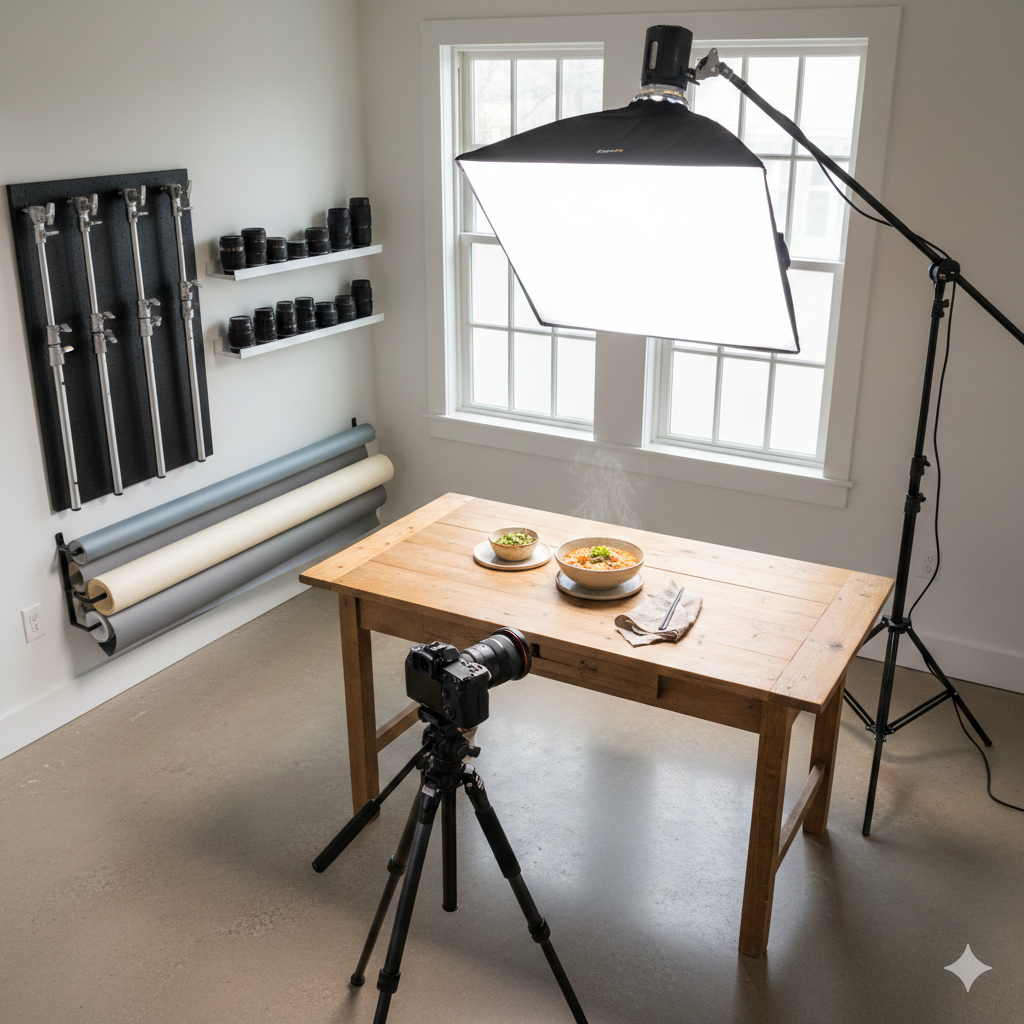
Your Home Studio Approach
You don’t build a portfolio with money.
You build it with awareness.
As your rep, I’m not looking for expensive objects. I’m looking for evidence:
- Can you control light?
- Can you create mood?
- Can you make a $12 object look like it belongs in a $4,000 campaign?
That’s the game.
Here are 10 ways to get product subjects without lighting your wallet on fire.
1. Grocery Store as “Prop House”
Walk the aisles like an art director.
Olive oil.
Chocolate bars.
Coffee.
Spices.
Pasta.
Hot sauce.
These brands already invested in design. You’re borrowing the equity.
Shoot it clean.
Shoot it moody.
Shoot it hyper-minimal.
Shoot it like a luxury brand relaunch.
Bonus: You eat the prop afterward.
2. Thrift Store Gold
$3–$5 gets you:
-
Vintage mugs
-
Old barware
-
Analog cameras
-
Kitchen tools
-
Ceramics
Texture. Patina. Personality.
Perfect for portfolio work and future props.
3. Borrow, Shoot, Return (With Respect)
Friends have:
-
Knives
-
Watches
-
Tools
-
Fitness gear
-
Skincare
Tell them you’re updating your book.
Offer them images for social.
You get subject matter.
They get content.
Zero dollars move.
4. The “Replace It Anyway” Strategy
You already mentioned this. Good instinct.
Need a new chef’s knife?
Shoot the box.
Shoot the knife.
Shoot it in use.
Shoot it hero-style.
Same with:
-
Coffee grinders
-
Water bottles
-
Cutting boards
-
Storage containers
Document the purchase like it’s a campaign.
5. Free Samples and Demo Days
Cosmetics counters.
Farmers markets.
Local makers.
Politely ask:
“Can I photograph this for my portfolio? I’ll send you the images.”
Most small brands are starving for visuals.
You get real-world product.
They get marketing material.
You get something that doesn’t look like you shot your pantry.